
2025 A Year in Books
Careless People: A Cautionary Tale of Power, Greed, and Lost Idealism
The Divine Matrix
The Woman Who Fooled the World
So You’ve Been Shamed
Eating by the Light of the Moon
The Psychopath Test
The God Code
Secrets of the Lost Mode of Prayer
Words that Change Minds
When the Body Says No
The Wisdom Codes: Ancient Words to rewire our brains and heal our hearts
Careless People: A Cautionary Tale of Power, Greed, and Lost Idealism The Divine Matrix The Woman Who Fooled the World So You’ve Been Shamed Eating by the Light of the Moon The Psychopath Test The God Code Secrets of the Lost Mode of Prayer Words that Change Minds When the Body Says No The Wisdom Codes: Ancient Words to rewire our brains and heal our hearts
Tis’ the season for my favorite blog, as I consolidate my reading list for the year. 2025 has been focused heavily on reading for personal health, as I have been processing the loss of my father, and reading for learning and growth, especially as we have experienced a significant amount of disruption socially, politically and economically. I do read significantly for fun and escapism as well, but that is a book list for another day. Enjoy!

Careless People: A Cautionary Tale of Power, Greed, and Lost Idealism
Careless People is a timely look at the rise of Facebook and an exploration of how wealth, ambition, and power shape, and often distort, our choices. It’s a powerful read for anyone building something in this world, especially entrepreneurs.
What stood out to me were the repeated moments of choice:
Build with integrity, or build for appearances.
Prioritize impact, or prioritize extraction.
Stay anchored in your values, or get swept away by money, status, or apathy.
The harder path isn’t glamorous or filled with fast wins, but it’s the path that lets you recognize yourself in the mirror. Careless People is a reminder that if you’re not intentional, the system will make the choice for you.
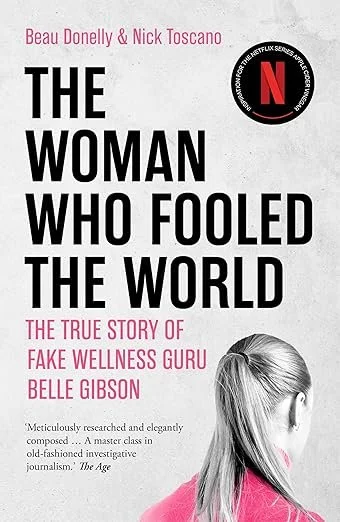
The Woman Who Fooled the World
This book recounts the rise and unraveling of wellness entrepreneur Belle Gibson, who gained fame for claiming she cured terminal brain cancer through diet and lifestyle, claims that were ultimately proven false.
As a behavioral designer, what struck me most was the emotional vulnerability surrounding terminal illness and how businesses can capitalize on that vulnerability. The narrative taps into a deeply human instinct: the desire for a simple, natural solution when the clinical path feels frightening and painful.
By the end, one thing became very clear: the morality of business and health is a slippery slope. It’s a riveting read, great storytelling for a flight or a bedside table, though maybe a little heavy for the beach.
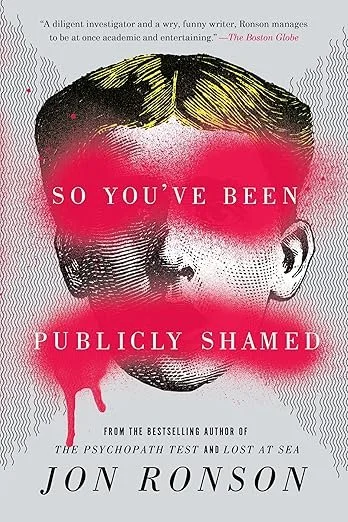
So You’ve Been Publicly Shamed
Jon Ronson explores the resurgence of public shaming, particularly through online platforms, and examines shame as a powerful psychological driver of behavior.
He unpacks high-profile shaming incidents, looking closely at why anonymity emboldens some people and why so many of us feel a sense of superiority when watching others fall.
It’s a fascinating read in an era where a single post can destroy someone’s life. Ronson ends by asking an important question: What does it mean for creativity and authenticity when we only share things we believe will appease the masses?
A quick, intriguing read perfect for travel, unless you’ve been online-shamed yourself, in which case maybe save it for a different moment.
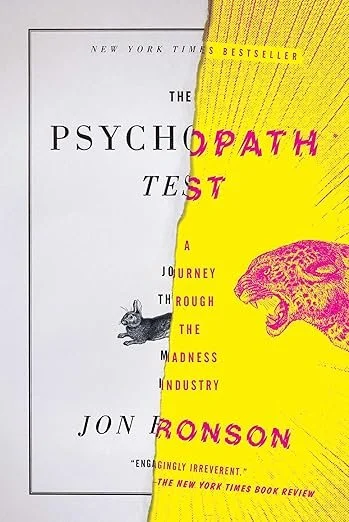
After finishing Jon Ronson’s book on shaming, I was intrigued to pick up The Psychopath Test. It’s a quick, entertaining journey through the strange world of diagnosing mental health.
My biggest takeaway:
C-suite environments can be uniquely accommodating places for psychopathic traits. In many corporate cultures, characteristics like grandiosity and lack of empathy are reframed not as red flags, but as hallmarks of a “strong” leader.
This book pairs interestingly with conversations happening in the business world about how leaders talk about workers, and whether we’re drifting back toward a more hardened, extractive managerial style.
Overall, it’s a fun and insightful nonfiction read that goes by fast.
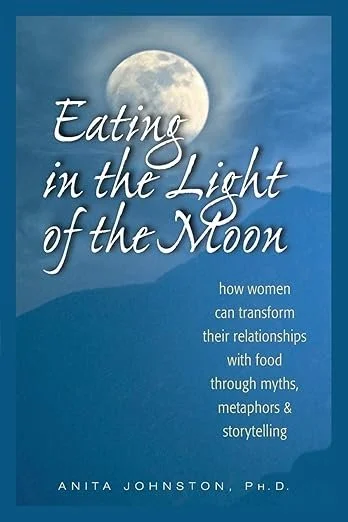
Eating by the Light of the Moon
During an especially stressful period, I noticed major shifts in my eating habits and was drawn to Eating by the Light of the Moon by Anita Johnston, a book about healing one’s relationship with food. What surprised me was how relevant its insights were to my professional work with women executives.
The book highlights a powerful truth:
Sustainable change doesn’t come from force, it comes from deep listening, symbolism, intuition, and rebalancing what has been silenced.
Many of the barriers women face aren’t structural; they’re cultural myths:
Worth is tied to productivity.
Rationality must override intuition.
Vulnerability undermines leadership.
Johnston reminds us that reconnecting to all parts of ourselves is essential for genuine transformation. It’s a beautiful, spacious read best taken slowly.
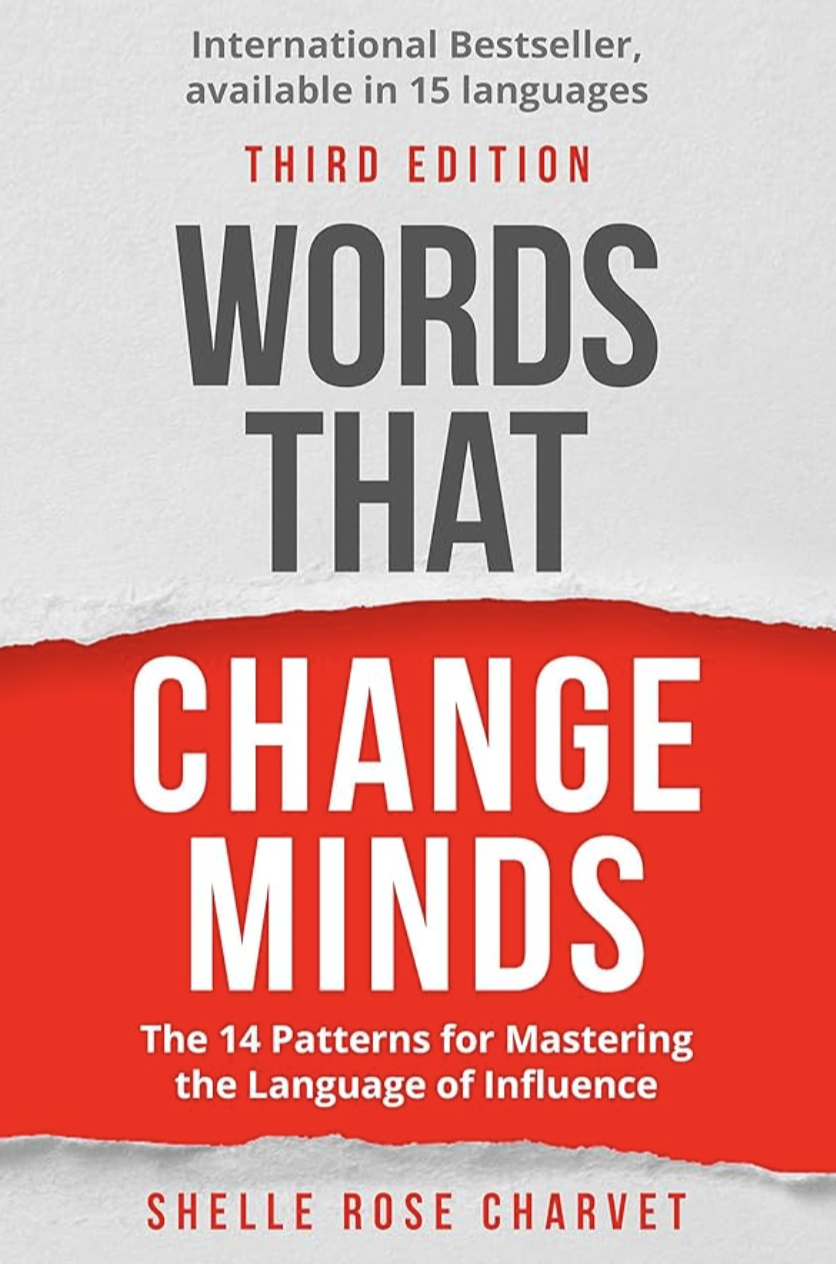
Rooted in NLP, this book introduces Language and Behavior (LAB) profiling, a practical method to decode how people think, make decisions, and take action.
For behavioral designers, this is gold.
Behavioral science gives us the why.
NLP gives us the how.
If you work in design, communication, change, or leadership, this one is worth your time. It does read like a self-paced course, so it’s best enjoyed when you have space to focus.
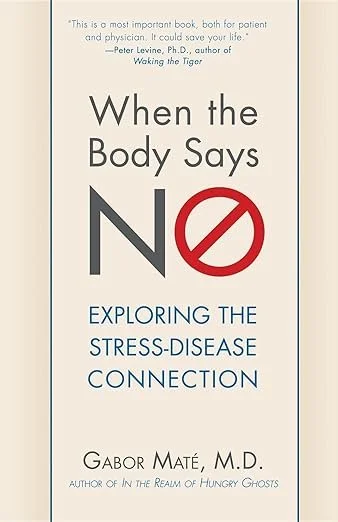
When the Body Says No: Exploring the Stress-Disease Connection
I choose a “word of the year” to guide my life, and this year the word “listen” became a truly transformative guiding word. Reading Gabor Maté’s When the Body Says No through that lens was powerful.
Maté argues that chronic stress and emotional repression don’t just affect mood; they manifest as illness, often severe illness. Ignoring our limits, silencing emotions, and pushing through exhaustion eventually exacts a physical price.
We talk about innovation as if it’s born from hustle, but creativity thrives when the nervous system is regulated. Ignoring our bodies is a shortcut to burnout, not breakthroughs. A sobering, essential read for leaders and innovators.

A trusted advisor recommended The Undependent Woman, and I want to shout about this book from the rooftops. The authors argue that our financial systems were never designed to empower women. The familiar narrative, get a good education, get a good job, save for retirement, often perpetuates dependency and exposes women to risk.
Their advice: build a portfolio of assets you control.
They walk through strategies that move you out of dependence on a paycheck or someone else’s decisions:
Holding hard assets like gold and silver
Building knowledge about bitcoin and digital assets
Owning land
Creating intellectual property that earns over time
The message is simple: diversify where your security comes from so your future isn’t hanging on one source.
A quick, important read, best enjoyed with a notebook in hand.
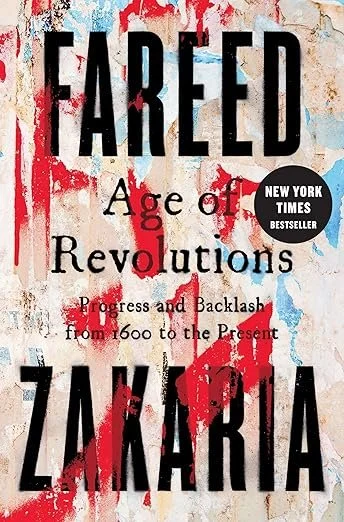
Age of Revolutions: Progress and Backlash From 1600 to the Present
Zakaria’s Age of Revolutions lays out three revolutions reshaping our world at once: technology, globalization, and culture. What struck me is how he frames this moment not as a temporary crisis, but as a long arc of transformation that requires new forms of leadership, adaptability, and imagination.
Reading this in 2025 made the book feel less like an analysis and more like a crystal ball. The pace we are experiencing isn’t going to slow down. Our systems aren’t going to stabilize in the way we once assumed. And the leaders who will thrive are the ones who can navigate constant transition without losing their center.
Overall, an informative and timely, though occasionally depressing read. While it offers some hope, the book is best read if you have the capacity to wrestle with the changes we’ve experienced this year.
Spirituality and Grief
After a period marked by profound personal loss and global upheaval, I was searching for a deeper understanding of the world, some way to make sense of what feels like a widespread erosion of empathy and compassion. The following selections are all by Gregg Braden, whose work blends science, spirituality, and human possibility in ways that felt grounding and expansive during a difficult season.
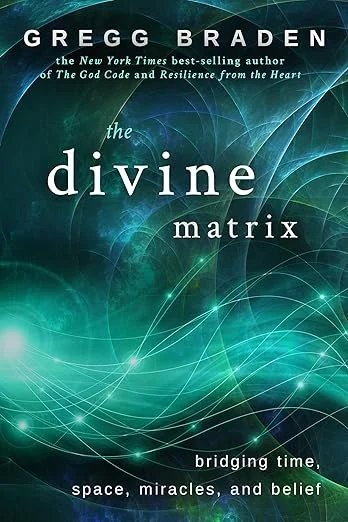
The Divine Matrix offers an exploration of human connection and reality-making through the lens of quantum physics. He introduces what he believes are the “20 keys” of reality, and my favorite five are:
Everything in the world is connected.
To tap into universal force, we must see ourselves as part of the world, not separate.
Focusing consciousness is an act of creation—consciousness creates.
We must become what we want to experience in the world.
Our true beliefs are reflected in our closest relationships.
It’s a magnificent, thought-provoking read, one that benefits from slow reading, note-taking, and space for reflection.
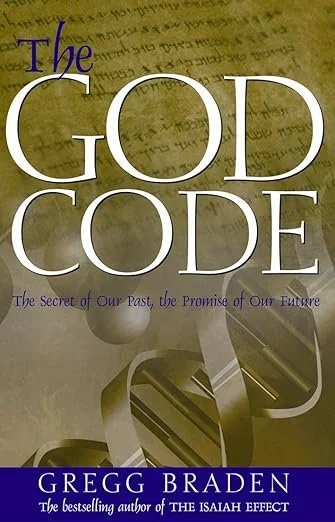
The God Code: The Secret of our Past, the Promise of our Future
Continuing my search for meaning in a time marked by intolerance, violence, and disconnection, The God Code explores the idea that the very makeup of our cells encodes a universal, divine intelligence. Drawing on Kabbalah, quantum physics, and sacred geometry, Braden attempts to bridge the worlds of science and spirituality.
While I found his translational methods difficult to follow at times, I appreciated the overarching message: beneath the labels of religion, race, culture, and belief, we share the same sacred source. A compelling pick for spiritual seekers and metaphysical thinkers.
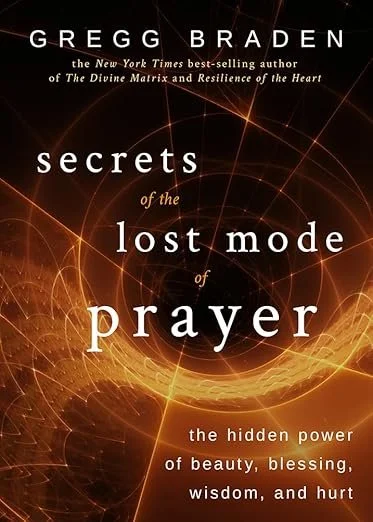
Secrets of the Lost Mode of Prayer: The Hidden Power of Beauty, Blessing, Wisdom, and Hurt
This book focuses on spirituality in a way that transcends any single religious tradition, and I can’t recommend it enough. What resonated most was Braden’s framing of the cycle between hurt and wisdom:
“Wisdom and hurt are two extremes of the same experience.
We change hurt into wisdom by finding new meaning in painful experiences.
Blessing, beauty, and prayer are the tools for our change.”
It’s a short, beautiful book best savored slowly in quiet moments.

The Wisdom Codes: Ancient Words to Rewire our Brains and Heal our Hearts
The Wisdom Codes provided perspective for navigating difficult times. Braden explores short, ancient phrases, “wisdom codes” meant to help move through fear, grief, and uncertainty with more grounding. Many of the phrases draw from spiritual traditions across cultures.
For anyone building through chaos, this book is a reminder:
Resilience isn’t just in what we know. It’s in what we anchor to.
It’s a short, grounding read best approached slowly, one code at a time, with space to reflect.