
How EcoAg Rebuilt from Crisis to Clarity
What does it take to rebuild an organization when trust has been broken, funding is uncertain, and the future of your field is shifting beneath your feet?
In 2025, EcoAgriculture Partners found itself at a crossroads. After significant leadership transition and institutional turbulence, the organization faced hard questions about its identity, its business model, and its relevance in a rapidly changing climate landscape. What followed was not a typical strategy refresh. It was a full organizational reckoning.
The CHALLENGE
EcoAg had been a pioneer in integrated landscape management for over two decades. But the market had changed. Climate funding was tightening. AI and new technologies were reshaping how landscapes could be managed. Private sector actors were entering the space. And internally, staff morale had been tested by a year of conflict, uncertainty, and loss.
The board and leadership team recognized that a new strategy alone would not solve the problem. The organization needed two parallel processes: cultural repair and strategic reinvention. Without rebuilding trust and clarity internally, any new strategy would sit on unstable ground.
OUR APPROACH
We began with two parallel work streams.
The first was a Culture Reset process. Through surveys, interviews, facilitated workshops, and the co-creation of a Code of Ethics, we surfaced hard truths about psychological safety, communication breakdowns, and organizational pain. This was not surface-level team building. It was an honest reset designed to restore dignity and move the organization forward.
In parallel, we launched the first phase of our strategy process through “Discovery”.
This included:
A comprehensive asset mapping exercise
A landscape and competitor analysis
Strategic foresight exploring multiple 2040 futures
Market interviews and partnership scans
Rather than asking, “What have we always done?” we asked, “What will the world need from us next?”
By early fall, the data was clear: EcoAg needed to simplify, clarify, and focus. The organization had to clearly communicate its value in accessible language, and design a model that could generate revenue in a more constrained funding environment.
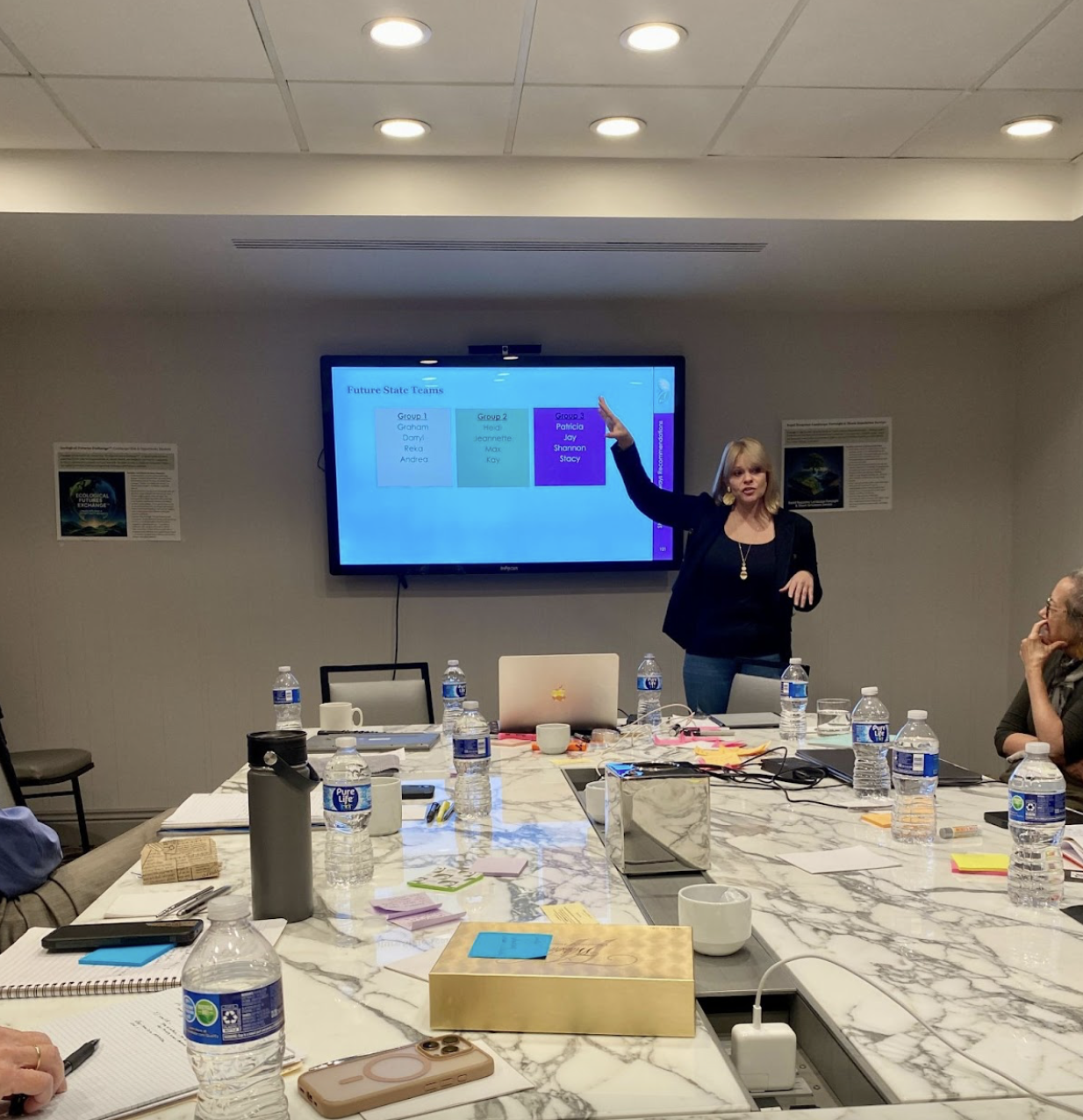
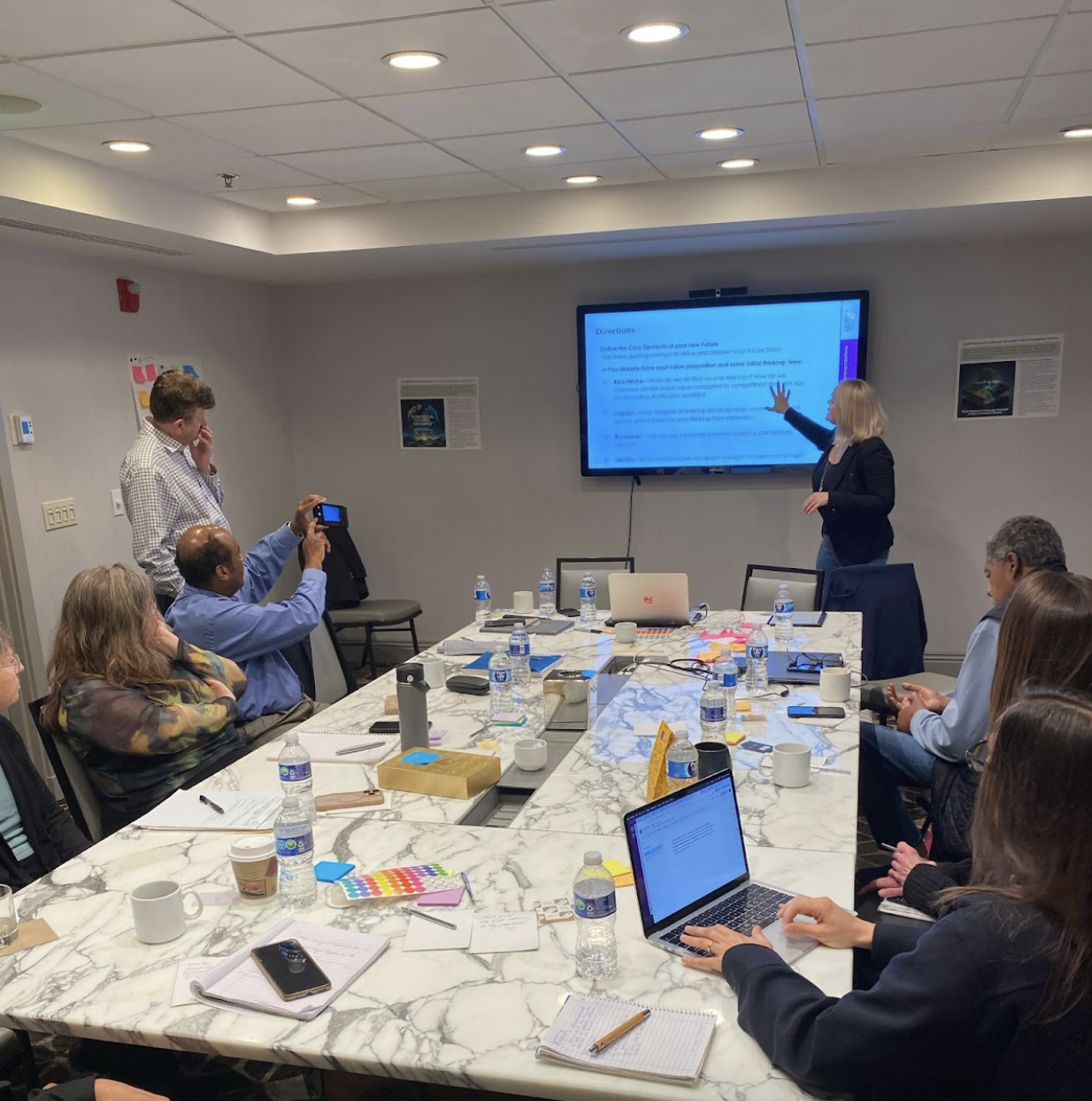
From there, we moved into a three month co-creation phase. Staff and board members gathered in person for a strategy workshop rooted in duality: what should we aspirationally aim for while at the same time honoring the assets we have to work with? Together, we evaluated core, adjacent, and transformational pathways. We debated merger scenarios and pressure-tested value propositions, ultimately identifying what to preserve and what to leave behind.
Finally, we entered the strategy writing phase. The outputs were translated into a concise 2026 Strategy and a pragmatic, measurable workplan with defined Objectives and Key Results. The result was not aspirational fluff. It was a stabilizing, actionable plan designed for the organization EcoAg is today, not the one it was five years ago.
THE OUTCOME
Three major shifts emerged.
First, clarity replaced ambiguity. EcoAg refined its service offering into five simple programmatic pillars and articulated a new internal theory of change grounded in capacity building, partnerships, and sustainable revenue. The language shifted away from academic framing toward accessible, solution-oriented messaging.
Second, focus replaced diffusion. Rather than chasing multiple possible identities, EcoAg doubled down on its core strength in integrated landscape management capacity building, while opening pathways to private sector partnerships and diversified funding.
Third, resilience replaced fragility. The organization adopted 2026 as the “Year of the Phoenix,” not as a marketing tagline, but as an acknowledgment of institutional transformation. Out of significant disruption came permission to reinvent.
WHY IT MATTERS
Many climate and landscape organizations are facing the same pressures: politicization, shrinking institutional funding, technological disruption, and identity drift. EcoAg’s journey is not unique. But its willingness to confront hard truths and rebuild deliberately is instructive.
Their strategy required the courage to focus, to let go of what no longer served the mission, and to move forward with intention.
By repairing its culture and prioritizing psychological safety, alongside rigorous market analysis and execution planning, EcoAg moved from uncertainty to confidence. The result is a leaner, clearer organization positioned to serve communities and partners in a changing world.