

For organizations working across the nonprofit and social impact space, the past 18 months have brought a stark realization: the turbulence we are navigating is not a temporary disruption, but a permanent change to how we operate. Funding models have shifted, operational environments have transformed, and leaders are facing tough choices.
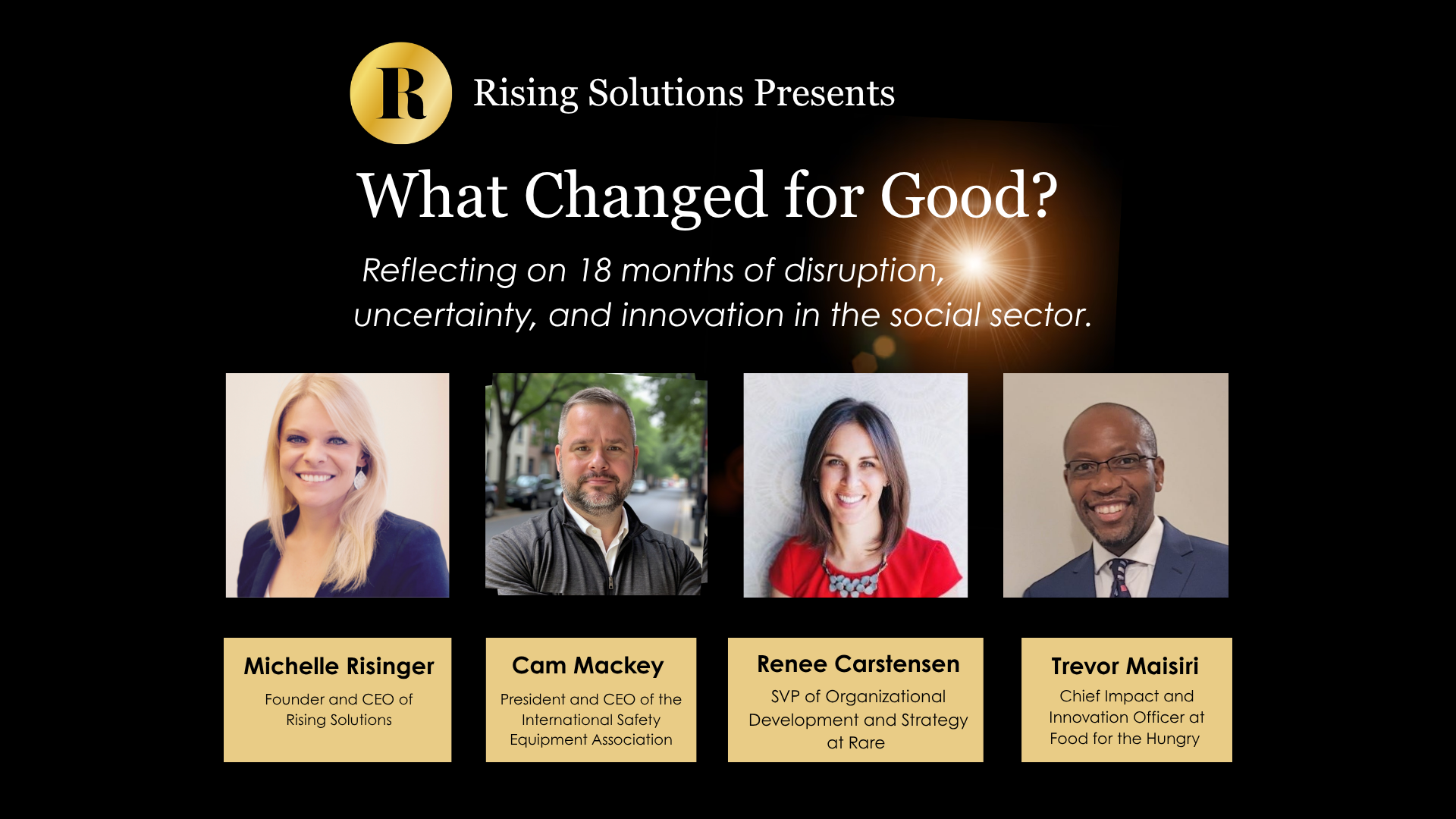
During Rising Solutions’ recent webinar panel, What Changed for Good, the session brought together three diverse social sector viewpoints: climate conservation, worker safety, and international humanitarian aid, to explore a pivotal question: What if the shifts we are seeing aren’t just temporary disruptions, but permanent changes to how we operate?
The panelists included:
Rene Baronis Carstensen, Senior Vice President of Organizational Development and Strategy at Rare
Cam Mackey, President and CEO of the International Safety Equipment Association (ISEA)
Trevor Maisiri, Chief Impact and Innovation Officer at Food for the Hungry
As leaders looked back at 18 months of intense disruption a central realization emerged: the old playbooks are no longer sufficient for the operating environment we are in today. The question is no longer when things will go back to normal, but rather how we must rebuild to thrive in a permanently altered landscape.
How Leaders Are Adapting Core Strategies in Action
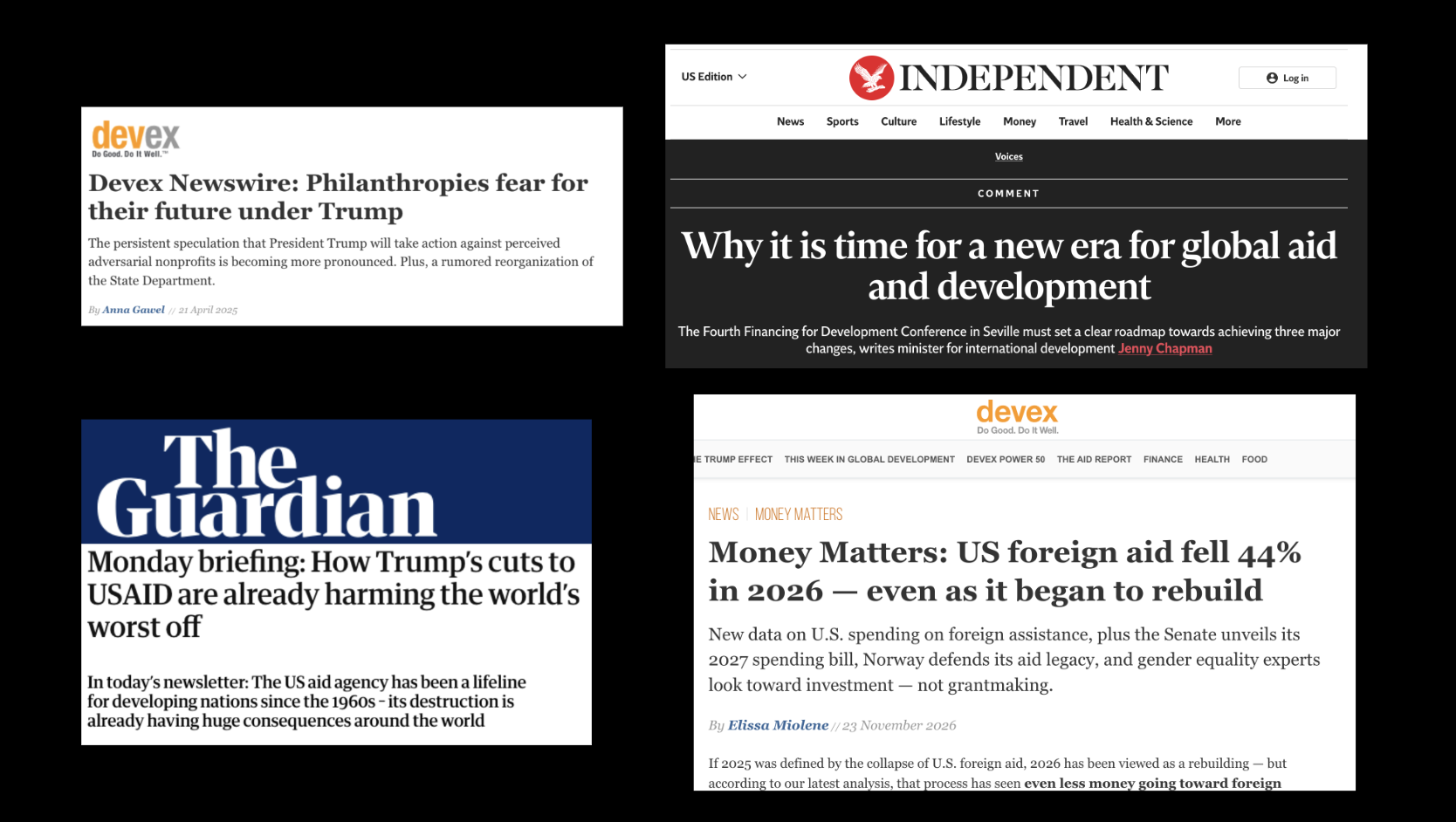
From May 2025 through early November 2026, the new U.S. administration radically altered both how much the U.S. spends on foreign assistance and how that funding reaches organizations. U.S. official development assistance fell 56.9% in real terms in 2025, according to preliminary OECD data. The U.S. accounted for roughly three-quarters of the overall decline among the donors tracked.
To adapt to the changing landscape, the panelists shared how their organizations are rewriting core strategies to match this permanent shift. For Renee Baronis Carstensen at Rare, the response wasn’t a sprawling list of new projects, but an intentional refocusing which she called, “innovating back to our core.” Similarly, Trevor Maisiri explained how Food for the Hungry looked outside of traditional boundaries by adapting a “fourth sector” mindset, co-designing solutions directly with impacted communities. At the operational level, Cam Mackey shared how ISEA replaced lengthy planning cycles with short, interactive sprints paired with customized AI tools. Together, these moves show that adapting for good requires a deliberate shift in how strategies are chosen, solutions are built, and daily work gets done.
Leading from the Frontlines of Disruption
Shaking up how an organization operates starts right at the top. Instead of pretending to have all the answers, the panelists reflected that leaders who leaned into transparency and vulnerability were able to foster stronger engagement.
Furthermore, financial pressure sparked an unexpected shift: cooperation over competition. As funding contracted, organizations increasingly turned to partnerships and shared resources, redefining scale not by revenue growth, but by the depth and sustainability of impact per dollar. Successfully navigating this new landscape requires building trust, collaborating across institutional boundaries, and translating limited resources into lasting outcomes.
Stakes for the Future: Why Today’s Decisions Define Tomorrow
The sentiment among the panelists is that these shifts are permanent, and the decisions leaders make today dictate tomorrow’s relevance. The panel’s discussion underscored that responding to disruption is not simply about weathering an immediate crisis; it is about building the capabilities, relationships, and operating models needed to remain effective over time.
This framing also shifts how organizations should think about preparedness. Panelists noted that the leaders best positioned for what comes next are those investing in adaptability before it is demanded of them, cultivating talent that can move across functions, strengthening partnerships that can flex under pressure, and creating decision-making structures that surface signals early rather than late. In view, resilience is less a defensive posture than a strategic discipline, one that treats uncertainty as a standing condition rather than a passing event. Organizations that embed this mindset into how they plan, hire, and allocate resources will not only withstand the next disruption but be better equipped to shape the direction of their industries when it arrives.
The implication is clear: holding onto legacy structures under the guise of temporary crisis management risks leaving an organization behind. Conversely, embracing agile workflows, digital capabilities, and authentic community partnerships bakes permanent adaptability into the mission. As the panel made clear, durable impact no longer depends on preserving familiar ways of working, but on permanently changing how the mission is delivered.
Turning Disruption into Your Next Catalyst for Innovation

Rising Solutions CEO and the panel host, Michelle Risinger, highlighted the core challenge: “Responding to disruption and preparing for the future are not the same muscles.” Her observation brings us back to the ultimate question we posed to the panelists: what changed for good?
Rare committed to focus over expansion;
ISEA integrated agile sprints and AI;
Food for the Hungry embedded community co-design into every initiative.
The decisions these organizations made under pressure today may define how the sector operates tomorrow; hopefully one that is more adaptive, more responsive to change, and better equipped to navigate whatever comes next.
How well does your organization learn its way forward? Take Rising Solutions’ four-minute Innovation Check to discover your organization’s innovation profile, see where you stand across culture, strategy, capability, resources, and execution, and get three practical ideas to try where you’re most stuck.