
Reimaging Governance Around Community Voice and Participation
Governance is often the last place organizations choose to innovate. Structures are inherited, processes are carefully protected, and change happens slowly, if at all. When Food for the Hungry (FH) began exploring a new governance model, they stepped into that reality with intention, knowing they wanted to meaningfully integrate community voice, but without a clear picture of what that would look like in practice. Rising Solutions (RS) was brought in to lead the human-centered design process to transform the FH governance model.
The Challenge
As a global organization operating across diverse cultural and regional contexts, FH needed more than structural design. They wanted a governance model genuinely informed by the realities of the communities they serve. That required a different kind of process. One grounded in listening, facilitation, and intentional co-creation.
Our Approach
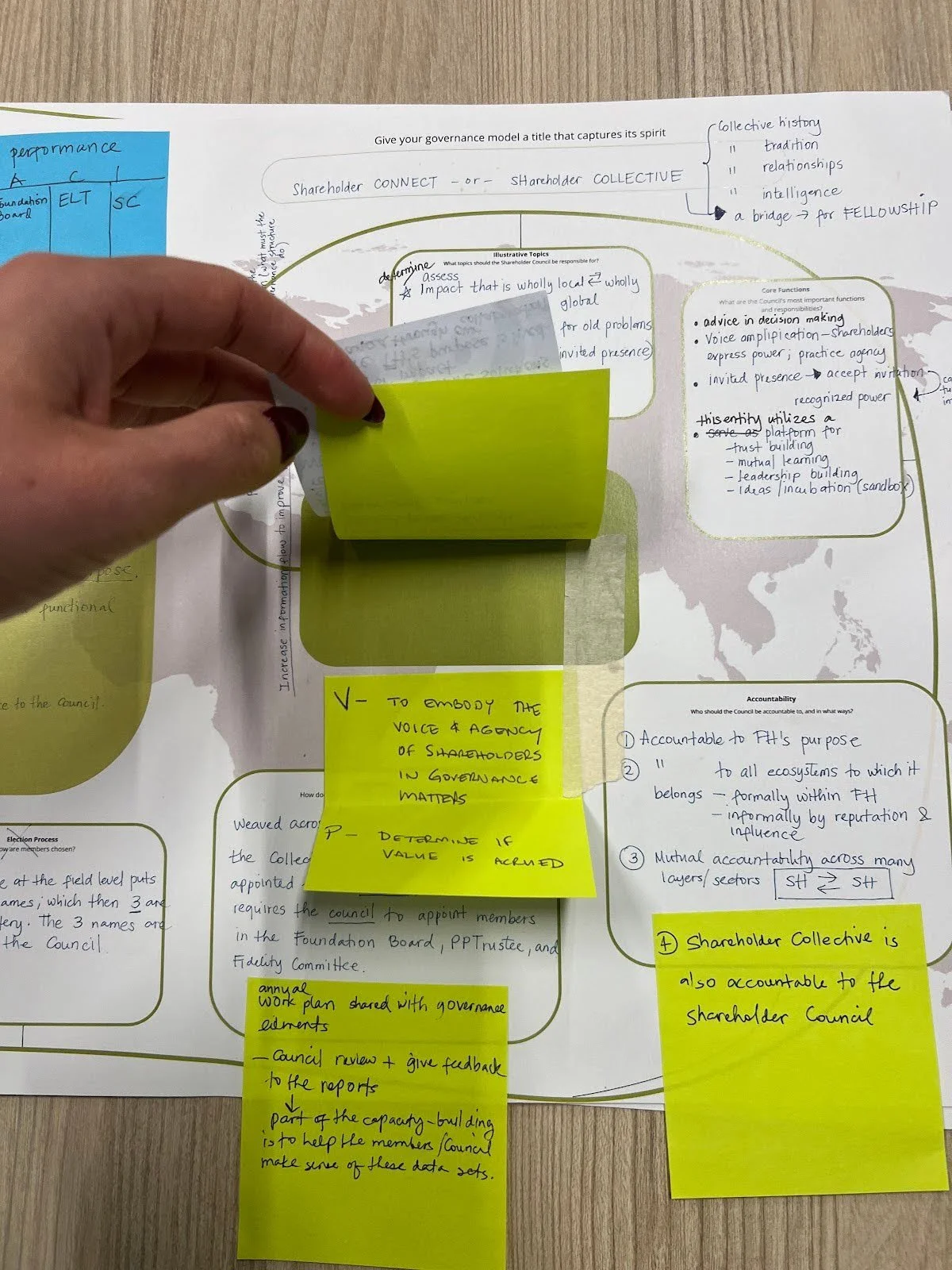
To accomplish this ambitious effort, RS partnered with an internal Sprint Team of FH leaders from across regions and guided them through a structured design process that combined deep discovery, facilitated sense-making, collaborative model building, and real-world testing. During the initial discovery process we knew that it would be critical to go underneath structure and look at the behavioral tenants of governance. We needed to move beyond formal structures to understand how leadership, agency, and accountability are actually practiced in the everyday community life of those they serve. We gathered data through targeted interviews and focus groups designed to match real user personas across multiple countries, alongside internal surveys and facilitated discussions that engaged hundreds of FH staff.
After four months of global discovery, we gathered the Sprint Team together for a multi-day design workshop to synthesize findings, surface tensions, and shape design directions. The session was structured to foster psychological safety and creative collaboration, allowing disparate perspectives to contribute ideas. Core insights and interview-derived personas were translated into design principles that guided the work. The group was divided into design teams tasked to translate these principles into governance concepts, through structured exercises designed to constantly challenge assumptions and expand creativity. Over several days, the teams developed and presented viable explorations for a future global governance model while creating shared clarity on unresolved tensions, capability gaps, and areas of emerging alignment.
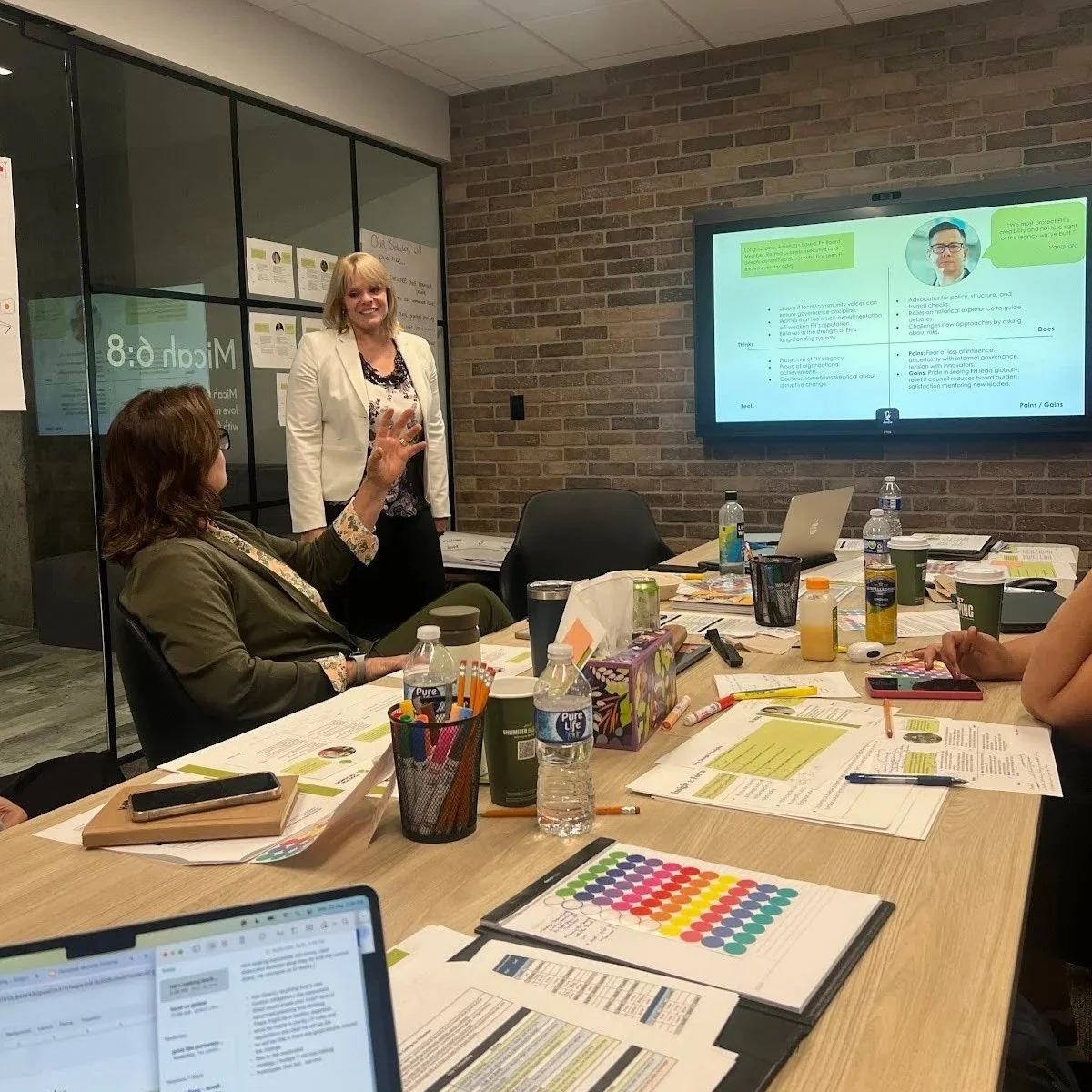
With these explorations established, the process moved into structured design. RS worked alongside the Sprint Team to translate the explorations into five prototypes. Each model explored a different approach to enabling community agency, accountability, and influence within FH’s governance ecosystem. Working with local researchers, these governance concepts were translated into accessible visual models and tested through facilitated dialogues with community leaders and internal stakeholders across multiple regions.
The Outcome
Through iterative refinement, the process culminated in a set of five governance model options supported by a decision framework and an implementation roadmap. Rising Solutions supported FH in clarifying the implications of each model, including organizational capacity, leadership expectations, and mechanisms for sustaining community participation. As a result, FH leadership was equipped not only with governance design choices but with a clearer understanding of the structural and behavioral shifts required to enable meaningful governance participation.
Why it Matters
Governance transformation reshapes how decisions are made and how accountability is shared. It requires more than structural redesign, it calls for openness to reflection, iteration, and new ways of working. As a long-term partner, FH engaged this process with a readiness to challenge established approaches, while intentionally creating space to challenge organizational beliefs, centralize community perspectives, and explore new approaches.
RS works with organizations facing similar inflection points, supporting leadership teams to make sense of complexity, build alignment, and move toward clear, actionable paths forward. Structural transformations, especially those introducing new ways of sharing power, require more than technical expertise. They require facilitation, deep listening, and thoughtfully structured co-creation. If your organization is navigating complex structural change, RS can guide the process from insight to implementation.